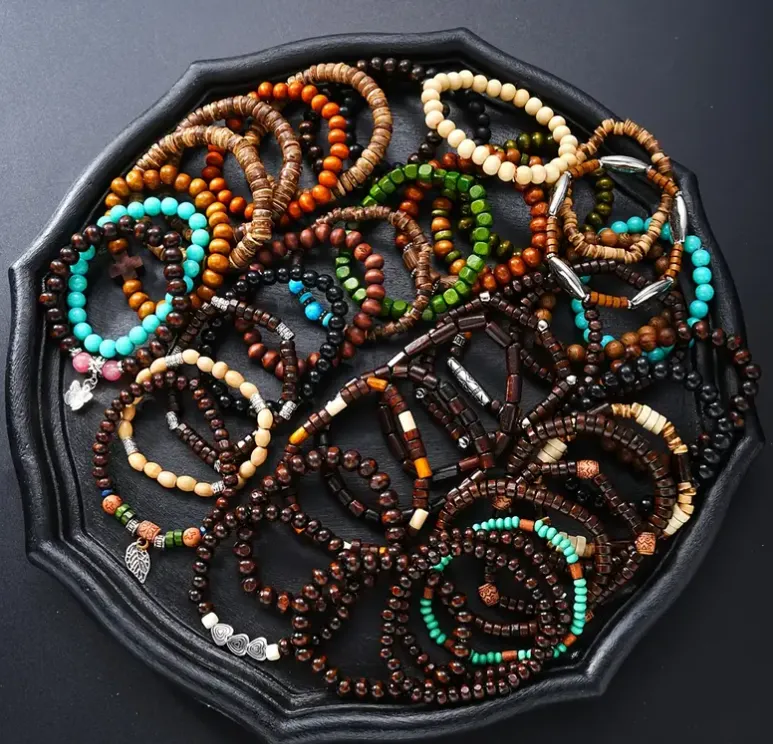
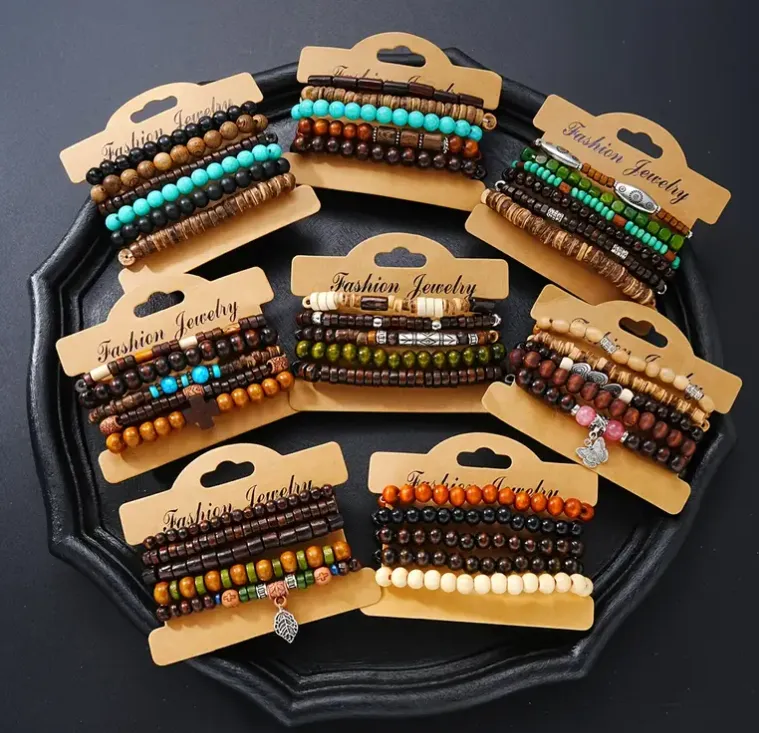
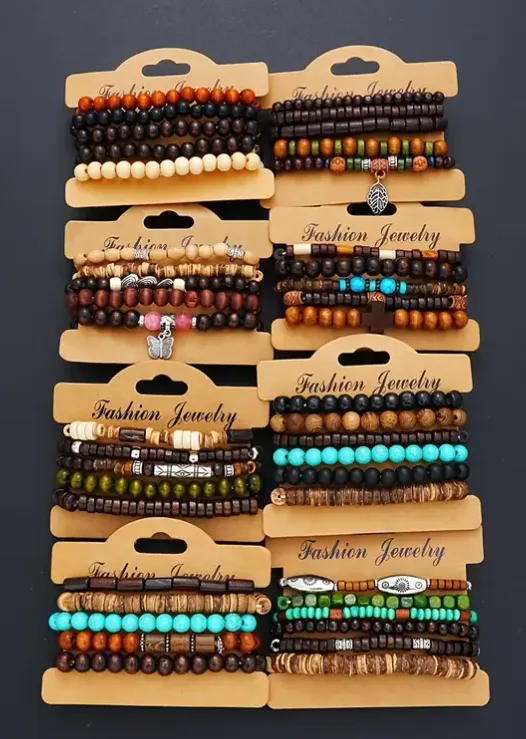
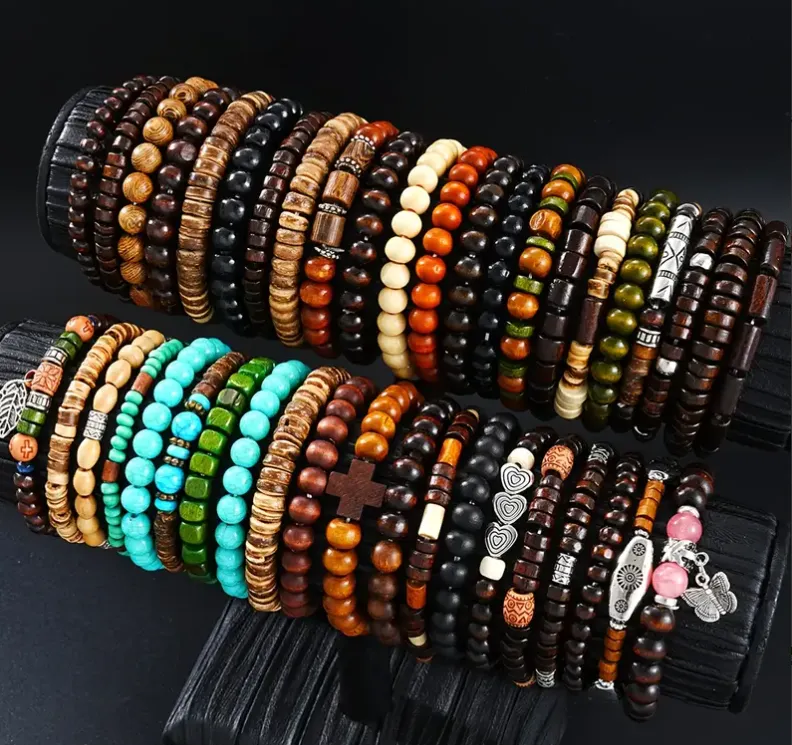
Wooden bead bracelets, commonly referred to as malas, hold profound significance in Hindu culture, serving both spiritual and practical purposes. These bracelets are not merely decorative items; they are deeply embedded in Hinduism’s spiritual practices and beliefs.
Historical Context
The use of wooden beads for spiritual practices dates back thousands of years in India. Ancient seers and practitioners initially used malas as tools for meditation and prayer. The word “mala” itself comes from Sanskrit, meaning “garland,” which reflects its traditional use in counting mantras during meditation.
Wearing a wooden bead bracelet allows practitioners to maintain a physical connection to their spiritual practice. Each bead represents a mantra or intention, helping individuals focus their minds during meditation. The tactile experience of moving the beads through one’s fingers can enhance concentration and promote a sense of tranquility.
Ritualistic Use
Wooden malas are integral to various rituals within Hinduism. They are commonly used during japa meditation, where practitioners repeat mantras while counting each repetition on the beads. This practice aids in deepening one’s focus and mindfulness. The number of beads typically found on a mala—108—is significant; it is believed to represent the 108 sacred names of the divine or the 108 human passions that one must overcome to achieve enlightenment.


Reviews
There are no reviews yet.